Introduction
You’ll probably see two different kinds of lifters in any gym. One group is grunting through big deadlifts and squats while loading crazy weights onto the bar. The other group is flexing in front of the mirror while doing dumbbell curls in an attempt to achieve the ideal muscle pump.
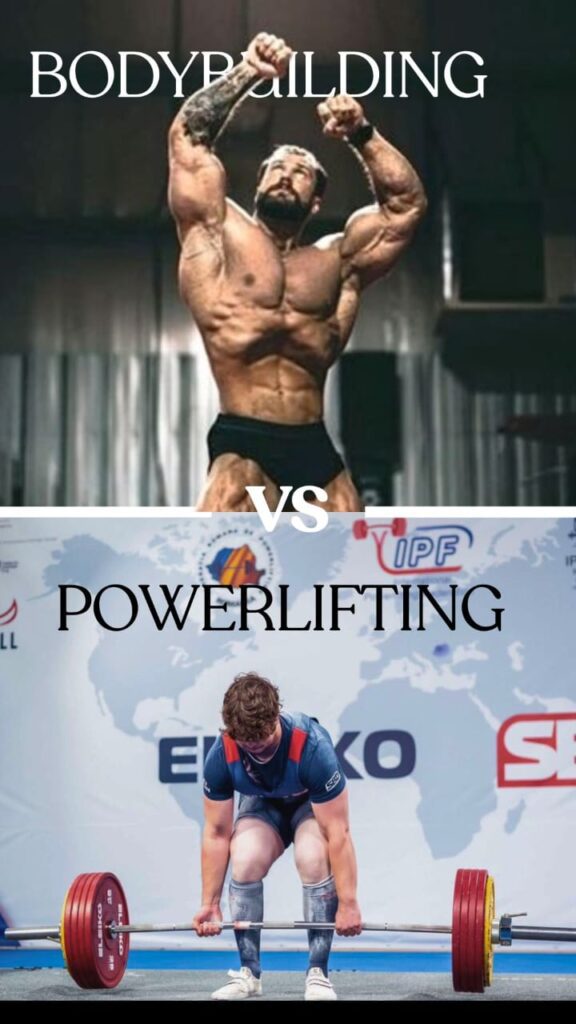
There is no one-size-fits-all approach to fitness, which is its beauty. The crucial query, though, is this: What is the true distinction between bodybuilding and powerlifting?
In the clearest manner possible, this article will explain whether path—the chiseled aesthetics of bodybuilding or the raw strength of powerlifting—is best for you.
bodybuilding competition
What is Powerlifting?
The ultimate strength sport is powerlifting. It all comes down to seeing how much weight you can lift with these three iconic moves:
Squat—The king of lower-body strength (Legs)
Bench Press—The true test of upper-body power (chest)
Deadlift—The raw pull of total-body strength
Forget about six-pack abs or muscle symmetry — in powerlifting, it’s all about the numbers. Whoever lifts the most weight, wins. Simple. Brutal. Honest.
In short: Powerlifters train for strength, not looks.

What is Bodybuilding?
Bodybuilding flips the script. Instead of asking, “How much can you lift?” the question becomes: “How good do you look?”
Bodybuilders train to build a physique that is:
Big (muscle mass)
Shredded (low body fat)
Balanced (symmetry between muscles)
Competitions aren’t judged on strength — they’re judged on how sculpted, aesthetic, and stage-ready your body looks.
In short: Bodybuilders train for looks, not max lifts.

Powerlifting vs Bodybuilding: The Face-Off
| Category | Powerlifting 🏋️ | Bodybuilding 💪 |
|---|---|---|
| Main Goal | Maximum strength | Maximum aesthetics |
| Training Style | Heavy weight, low reps | Moderate weight, higher reps |
| Focus Lifts | Squat, Bench, Deadlift | Whole-body + isolation exercises |
| Diet | Fuel for performance | Strict for muscle gain & fat loss |
| Competitions | Based on how much you lift | Based on how good you look |
| Body Type | Dense, powerful | Sculpted, lean, shredded |
Training Styles Compared powerlifting and bodybuilding
Powerlifting Training
Rep Range: 1–5 reps (super heavy)
Workout Style: Mastering technique on the “Big Three”
Accessory Lifts: Rows, overhead presses, pull-ups for support
Mindset: Strength > everything
Bodybuilding Training
Rep Range: 8–15 reps (muscle growth zone)
Workout Style: Split training (Chest Day, Back Day, Arm Day, etc.)
Accessory Lifts: Lots of isolation work (biceps, triceps, calves, abs)
Mindset: Looks > numbers
One is chasing plates on the bar, the other is chasing muscle definition in the mirror.
Nutrition: Fueling the Machine
Powerlifting Diet
Calories: High — strength requires energy
Carbs: Plenty, to fuel explosive lifts
Protein: Moderate to high, to recover muscles
Flexibility: Not overly strict — performance comes first
Bodybuilding Diet
Bulking Phase: Calorie surplus for muscle gain
Cutting Phase: Calorie deficit for fat shredding
Protein: High — to protect muscle during cuts
Discipline: Ultra-strict (meal prep, weighing food, timed meals)
A powerlifter eats to lift more. A bodybuilder eats to look better.
Competitions: Stage vs Platform
Powerlifting Meets
Lifters get 3 attempts at squat, bench, and deadlift
Judges score based on successful lifts
Winner = heaviest total weight
Bodybuilding Shows
Athletes showcase poses and routines
Judges score muscle size, definition, and symmetry
Winner = best-looking physique
Powerlifters show strength. Bodybuilders show art.

Benefits of Powerlifting
Builds insane raw strength
Boosts mental toughness & discipline
Improves bone density and joint health
Progress is easy to track (weight on the bar never lies)

Benefits of Bodybuilding
Develops a lean, aesthetic physique
Improves muscle endurance
Increases body confidence
Keeps you fit beyond strength (cardio, conditioning, posing)
The Downsides You Should Know
Powerlifting Cons
High injury risk due to heavy loads
Less focus on full-body aesthetics
Can create muscle imbalances if not careful
Bodybuilding Cons
Strict dieting can be mentally exhausting
Focus on looks may lead to body image issues
Strength gains are slower compared to powerlifting
Which One Should YOU Choose?
Pick Powerlifting if you:
Love heavy weights and raw strength
Want numbers to measure your progress
Care more about performance than looks
Pick Bodybuilding if you:
Dream of a shredded, muscular physique
Don’t mind strict diets and posing routines
Care more about aesthetics than max lifts
Pro Tip: You don’t have to choose one forever. Many lifters mix both — a style called Powerbuilding — where you train heavy like a powerlifter but also shape your muscles like a bodybuilder.
Conclusion
At the end of the day, powerlifting and bodybuilding are two sides of the same coin. One builds strength you can feel, the other builds a physique you can see.
Powerlifting = Strong like a beast
Bodybuilding = Look like a Greek god
The real winner? YOU — as long as you’re training, eating right, and enjoying the journey. Whether you want to dominate the barbell or own the stage, fitness will always reward discipline, patience, and passion.
FAQ
Q1. Which is better for beginners: Powerlifting or Bodybuilding?
A: Beginners usually start with bodybuilding to learn form, build muscle, and condition the body. Powerlifting can come later for advanced strength goals.
Q2. Can I do both powerlifting and bodybuilding together?
A: Yes! It’s called Powerbuilding, a mix of strength training and hypertrophy workouts, giving you the best of both worlds.
Q3. Which burns more fat: Powerlifting or Bodybuilding?
A: Bodybuilding is generally better for fat loss due to higher reps, cardio, and strict dieting. Powerlifting burns calories but is focused on strength.
Q4. Who looks bigger: Powerlifters or Bodybuilders?
A: Bodybuilders usually look more muscular and defined, while powerlifters look dense and strong but not always shredded.
Q5. Which is safer: Powerlifting or Bodybuilding?
A: Both can be safe with proper technique. However, powerlifting has a higher injury risk due to extremely heavy loads.
2 comments. Leave new
👏🏻👏🏻
best website to know about your body and how to train it accordingly.